

Social media has become a dominant force in shaping opinions, spreading information, and connecting communities. Yet, it is also being weaponised by hostile actors to weaken Pakistan’s internal stability. With over 72.9 million active users, the majority of them young people, Pakistan faces a serious challenge in securing its digital space.
A New Battlefield
The exploitation of social media is a key element of Fifth Generation Warfare (5GW), where conflicts are no longer confined to borders but are fought in the information domain. Hostile states and anti-state groups such as India, TTP, and BLA use online platforms to spread propaganda, manipulate narratives, and foster disunity.
Their objectives are clear:
– Undermine political stability through disinformation and polarisation.
– Damage economic progress, especially foreign investments and CPEC projects.
– Promote terrorist recruitment and extremist ideologies.
– Spread psychological warfare, creating mistrust and confusion among citizens.
Gaps in Pakistan’s Response
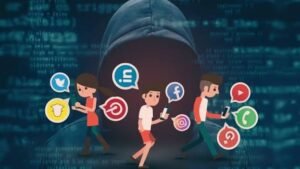
Despite the seriousness of this threat, Pakistan’s current response remains limited. Laws such as PECA 2016 exist but are weakly enforced. The National Security Policy 2022 acknowledges information warfare but lacks effective execution. Furthermore, the absence of a national firewall and weak coordination between institutions have allowed external propaganda to flow unchecked.
The Way Forward
Pakistan must act decisively to safeguard its digital sovereignty. Key steps include:
– AI-powered monitoring systems to detect and block disinformation.
– Digital literacy campaigns to educate youth against online manipulation.
– Strengthening cyber laws and introducing a national firewall.
– Public-private partnerships involving tech firms, academia, and civil society.
– Empowering institutions like PTA, FIA, and NACTA with resources for cyber governance.
Conclusion
The weaponisation of social media is a national security threat that Pakistan cannot afford to ignore. A comprehensive policy on information warfare, combined with a robust cybersecurity infrastructure, is critical. Most importantly, the youth—Pakistan’s largest online demographic—must be empowered with awareness and resilience. Protecting Pakistan’s digital space is not just a security requirement; it is a step toward securing the nation’s future.
