

Ethical innovation protects human dignity, reduces harm, and promotes trust and fairness. When such principles are not taken into consideration, then social unrest is likely to follow. Innovation without ethics weakens democratic institutions, promotes inequality, and threatens civic freedoms. South Asia is shifting to quicker and cheaper phones with smart capabilities, increased internet speed, and privatized behaviors, transforming millions of individuals. Digital banking in Pakistan, biometric identification in India, online governance structures in Bangladesh, and many other technologies are defining the lives of hundreds of millions of people. These inventions are most commonly promoted as the icons of development and modernization. They promise productivity, growth, and even greater democracy. The harsh reality, however, is that, as technology increases at a rate faster than the rules that are meant to protect the citizens, it may be detrimental to democracy. An absence of ethics of privacy, transparency, and accountability that makes life easy can also be used to silence critics, spread misinformation, and deceive others with weapons that have eased life. The issue in South Asia does not concern whether technology will affect democracy or not it is already doing so. The question is whether it will strengthen it or break it.
This article will argue that unethical innovation is dangerous to South Asian democracy in three respects: it skews the information environment, it strengthens state surveillance through undemocratic means, and it undermines the confidence of society. Innovation might become a power of oppression instead of empowerment unless there is ethics and accountability in the innovation process. The label ethical innovation in this case is gathering data when it is needed, storing it using their own devices when they can, deleting it quickly, and giving end users the right to object or appeal the judgment of the algorithms.
In South Asia, politics increasingly plays out on WhatsApp, YouTube, TikTok, and other apps. These platforms give citizens a chance to share their voices and hold leaders accountable. At the same time, they make it very easy for lies to spread faster than the truth. Fake news, edited videos, and AI-generated deepfakes often move faster than real facts. During the national elections 2024 in India, researchers have found out how voters have been influenced by deepfakes made in different languages. Through his agents, in one of the fabricated videos, Prime Minister Narendra Modi made a speech in the Tamil language, a language he can hardly speak. Millions of people shared such AI videos within hours, particularly in the village, where not a lot of fact-checking was done.
Such practices not only confuse voters but also polarize communities. Platforms have tried small fixes, like limiting how many times a WhatsApp message can be forwarded. These measures help a little, but they are not enough. If there are no clear rules for political ads and no proper labels for AI-generated media in local languages, then democracy suffers. People cannot agree on basic facts, democratic debate turns into endless arguments, and trust in elections becomes weaker.
Another big challenge is the rise of surveillance technology. CCTV cameras, facial recognition, and predictive policing are spreading fast. They’re often promoted as part of smart city projects promising safer streets and better public services. But independent reporting shows a different reality. This risk becomes worse in places that also use internet shutdowns or sweeping content blocks during protests and elections. Whenever there is a political outburst, the government of Pakistan has issued internet curfews and digital policing on numerous occasions. The most obvious example was when the government blocked the internet throughout the nation in three days in May 2024, because of the demonstrations at the court hearings of Imran Khan. This cost the economy about 30 million a day; journalists were unable to cover the news, not to mention that individuals could not communicate with their relatives. The relocation stifled dissent in the immediate future but killed the confidence that gave rise to people discovering that technology can be used against democracy.
When governments rely on such heavy-handed digital controls, citizens lose their ability to speak freely, come together, and hold those in power accountable. These are basic parts of democracy, yet they are weakened by unchecked surveillance. The problem is not technology itself. The danger comes when there are no limits, no oversight, and no accountability.
The risks grow even more during political or military crises. The spring of 2025, when tensions between Pakistan and India escalated, is a good example. Both sides carried out strikes, flights were cancelled, and social media was flooded with competing claims. Each side declared victory and accused the other of lying. Fake videos and deepfakes went viral, shaping public opinion and making it harder for leaders to back down without losing face. At the same time, cyberattacks targeted government websites and media outlets. Drones and sensors blurred the line between military and civilian spaces. In such moments, technology is not neutral. It becomes part of the conflict, often in dangerous and unethical ways. For two nuclear-armed neighbors, this is extremely risky. Innovation without ethics lowers the threshold for escalation. When propaganda, cyber operations, and drones mix with old rivalries, the cost of miscalculation grows.
What does ethics mean in practice? It is not just a fancy idea but the basic work needed to keep democracy strong. For identity systems and biometrics, this means using people’s data only when truly necessary, keeping it for a limited time, and protecting it from outside access. For social media, it means showing political ads with full transparency in real time, clearly marking AI-generated content in local languages and allowing researchers to study harmful effects without risking people’s privacy. For surveillance, it means checking how these tools affect people, testing them to spot errors and biases, and making sure they are not misused. For cybersecurity, it means allowing only temporary emergency actions with court approval, regular reviews by lawmakers, and telling the public once operations are over. In times of war or near conflict, it means clear bans on fake media by governments, quick fact-checks of official statements before they are published, and secure hotlines between platforms, election bodies, and independent media to block proven false information without silencing real expression.
Some people fear that rules will slow down progress. In reality, the opposite is true: clarity builds confidence and confidence speeds up adoption. When people know their rights are protected, even in cyberspace, they feel comfortable using new tools and raise fewer complaints. When companies understand the limits, they can compete by making better products instead of exploiting loopholes. Doing things properly also attracts global partners and investors, because they prefer places where privacy and laws are respected. None of this requires waiting for perfect laws. It simply needs leadership and the understanding that long-term trust is a real strength. In short, ethics is like a seat belt and steering wheel it keeps innovation safe and moving in the right direction.
Conclusion
Finally, ethics must be constitutional, not cosmetic. Emergency powers, once normalized, rarely shrink. Surveillance networks, once built, are hard to dismantle. Disinformation tactics, once rewarded, multiply. South Asia’s democracies have survived wars, insurgencies, and social upheaval because people insisted on rights and pluralism even when leaders faltered. The digital revolution should be no different. Technology can absolutely deliver welfare, inclusion, and growth at scale. But to strengthen democracy, it must be fenced by rules that protect the vulnerable from becoming datasets, dissenters from becoming suspects, and the public square from becoming an algorithmic echo chamber. If South Asia embeds ethics into code and policy from biometric gates to viral videos, from welfare databases to wartime drone innovation, it can widen freedom rather than shrink it. The region has the talent and energy. Now it needs the courage to govern.
References
Freedom House. (2024, October). Freedom on the Net 2024: The struggle for trust online (Asia-Pacific release). https://freedomhouse.org/article/fotn-2024-asia-pacific-release (Freedom House)
GNET (Global Network on Extremism and Technology). (2024, September 11). Deep fakes, deeper impacts: AI’s role in the 2024 Indian general election. https://gnet-research.org/2024/09/11/deep-fakes-deeper-impacts-ais-role-in-the-2024-indian-general-election-and-beyond/ (GNET)
Harvard Kennedy School Misinformation Review. (2020). Garimella, K., & Eckles, D. Images and misinformation in political groups: Evidence from WhatsApp in India. https://misinforeview.hks.harvard.edu/article/research-note-tiplines-to-uncover-misinformation-on-encrypted-platforms-a-case-study-of-the-2019-indian-general-election-on-whatsapp/ (Misinformation Review)
Tech Policy Press. (2025, February 24). Jahangir, R. Why 2024 was the worst year for internet shutdowns. https://techpolicy.press/why-2024-was-the-worst-year-for-internet-shutdowns (Tech Policy Press)
The India Forum. (2024). Verma, D. Digi Yatra: Service or surveillance? https://www.theindiaforum.in/technology/digi-yatra-service-or-surveillance (The India Forum)
Reuters. (2025, May 7). Airlines re-route, cancel flights due to India–Pakistan fighting. https://www.reuters.com/business/aerospace-defense/asian-airlines-re-route-cancel-flights-due-india-pakistan-fighting-2025-05-07/ (Reuters)
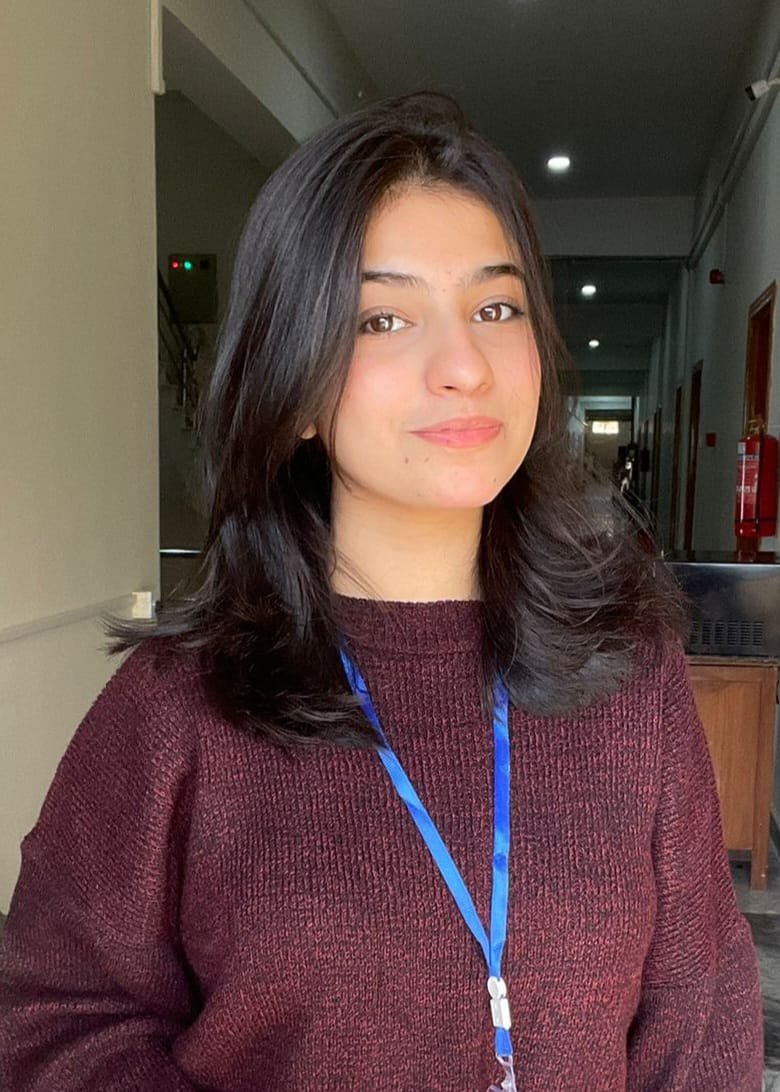
Zainab Tariq is student of Strategic Studies at National Defence University Islamabad. She has great interest in discussing the issues of national security, conflict resolution and international relations. She actively takes part in analytical and academic debates, in which she writes on issues that are related to the dynamics of regional security to upcoming threats within the country. In her work, her interest in clarity, peacebuilding and international affairs is clear.